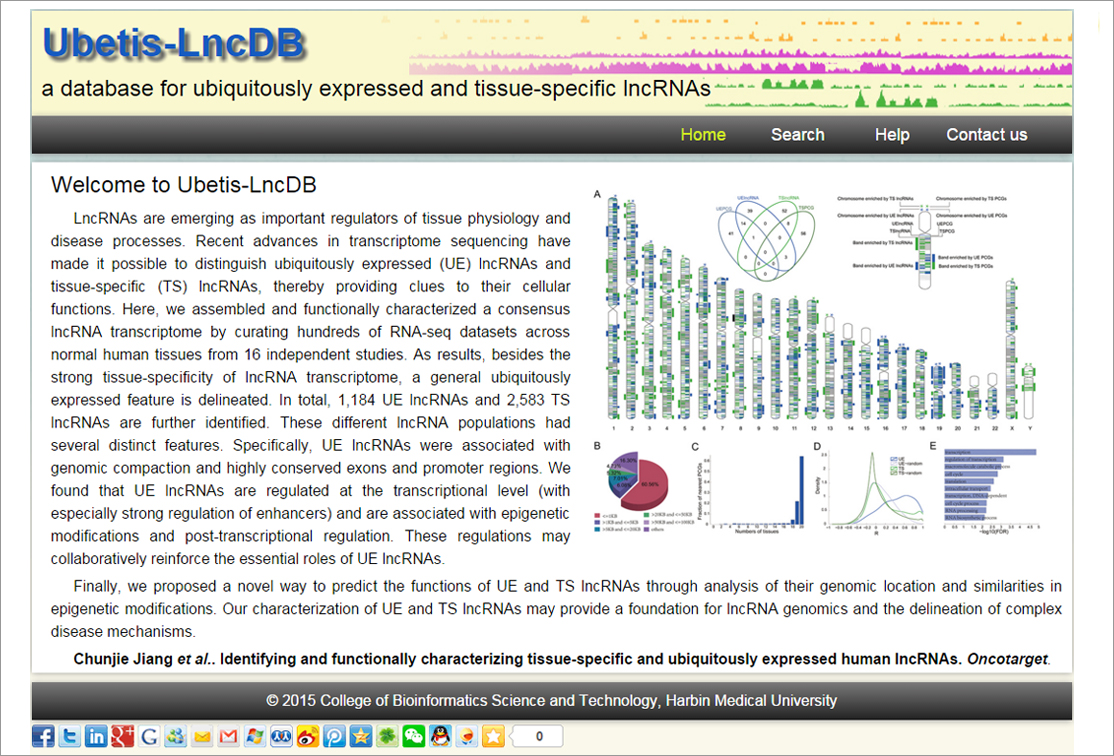
1. Overview

Recent advances in transcriptome sequencing have made it possible to distinguish ubiquitously expressed long non-coding RNAs (UE lncRNAs) from tissue-specific lncRNAs (TS lncRNAs), thereby providing clues to their cellular functions. Here, we assembled and functionally characterized a consensus lncRNA transcriptome by curating hundreds of RNA-seq datasets across normal human tissues from 16 independent studies. In total, 1,184 UE and 2,583 TS lncRNAs were identified. These different lncRNA populations had several distinct features. Specifically, UE lncRNAs were associated with genomic compaction and highly conserved exons and promoter regions. We found that UE lncRNAs are regulated at the transcriptional level (with especially strong regulation of enhancers) and are associated with epigenetic modifications and post-transcriptional regulation.

Based on these observations we propose a novel way to predict the functions of UE and TS lncRNAs through analysis of their genomic location and similarities in epigenetic modifications. Our characterization of UE and TS lncRNAs may provide a foundation for lncRNA genomics and the delineation of complex disease mechanisms.
2. Search menu

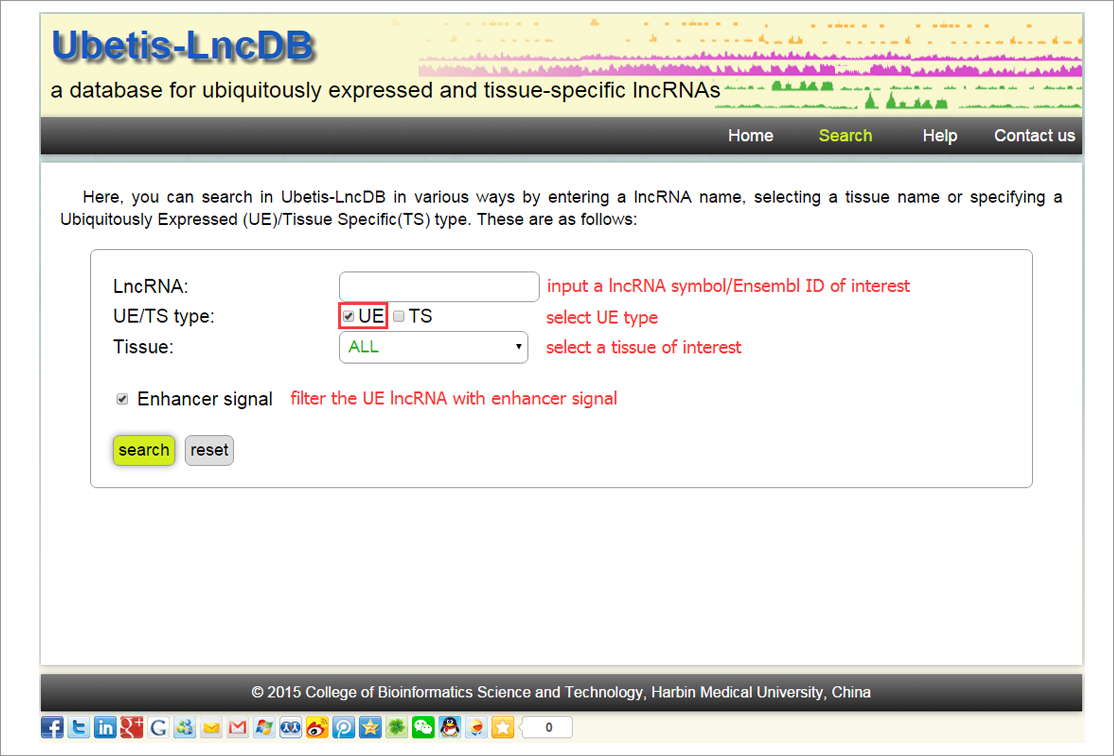
The search page allows users to to input different key words for different purposes. Users can enter a lncRNA name or lncRNA Ensembl ID of interest, select a tissue name and specify a ubiquitously expressed(UE) type to query the ubiquitously expressed lncRNAs. In addition, users can also enter a lncRNA name or lncRNA Ensembl ID of interest, select a tissue name and specify a Tissue-Specific(TS) type to query the tissue-specific lncRNAs.

2.1 Search ubiquitously expressed lncRNAs

To retrive ubiquitously expressed lncRNAs, users can input a lncRNA name or lncRNA Ensembl ID of interest and select the UE type. Importantly, ubiquitously expressed lncRNAs can be filtered by selecting Enhancer Signal so that at least one enhancer exists in the vicinity of lncRNA.


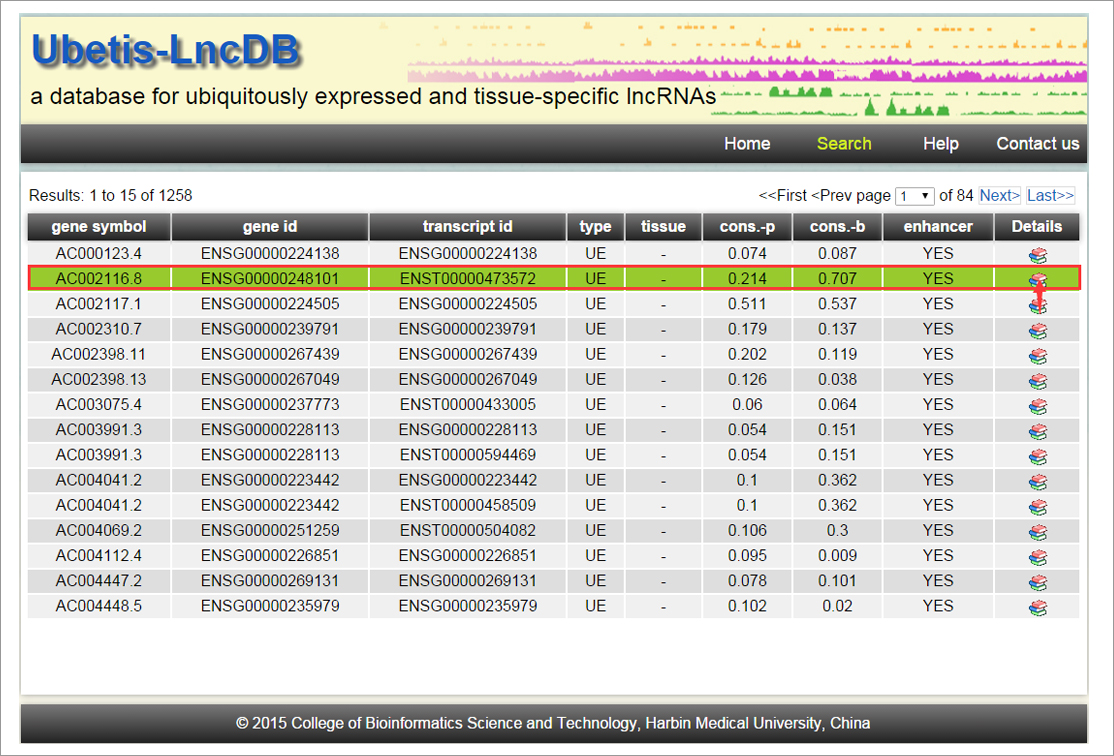
The search result is displayed by default as an overview table that summarizes the ubiquitously expressed lncRNAs, together with their detailed information, such as gene symbol, gene id, transcript id, type, tissue, conservation score at gene promoter, conservation score at gene body, whether at least one enhancer is located in the vicinity of the lncRNA. In addition, the details about lncRNA information, expression levels in tissues and histone modification levels in cell lines can be browsed by clicking .


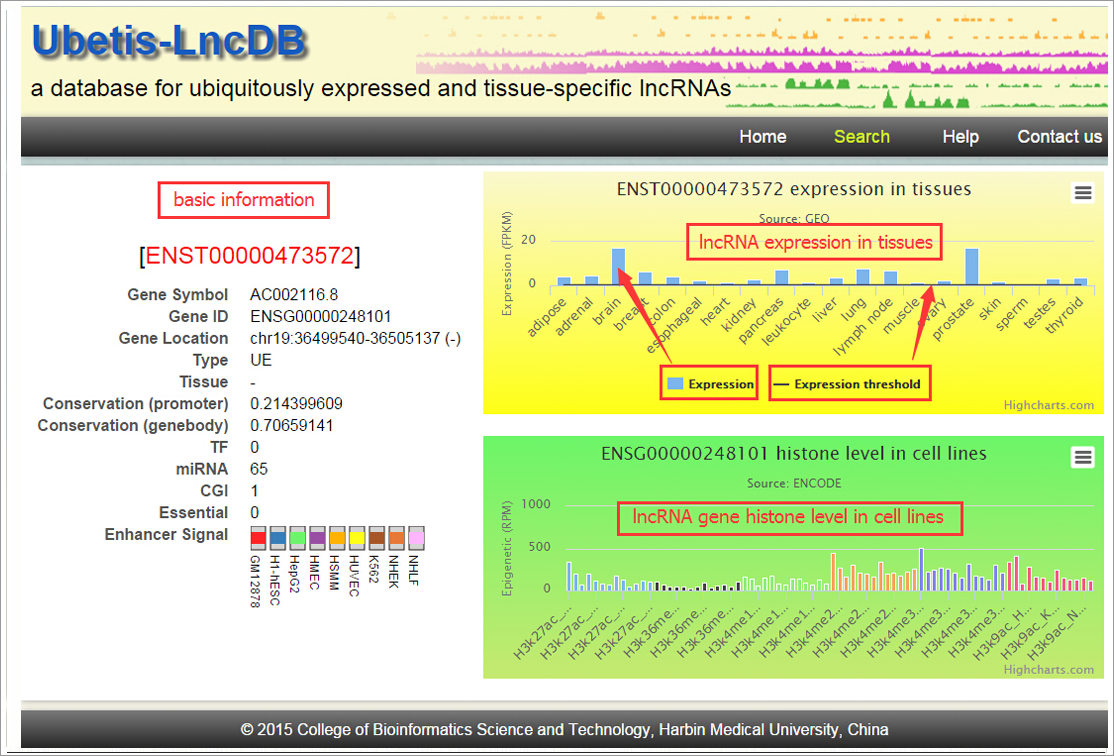
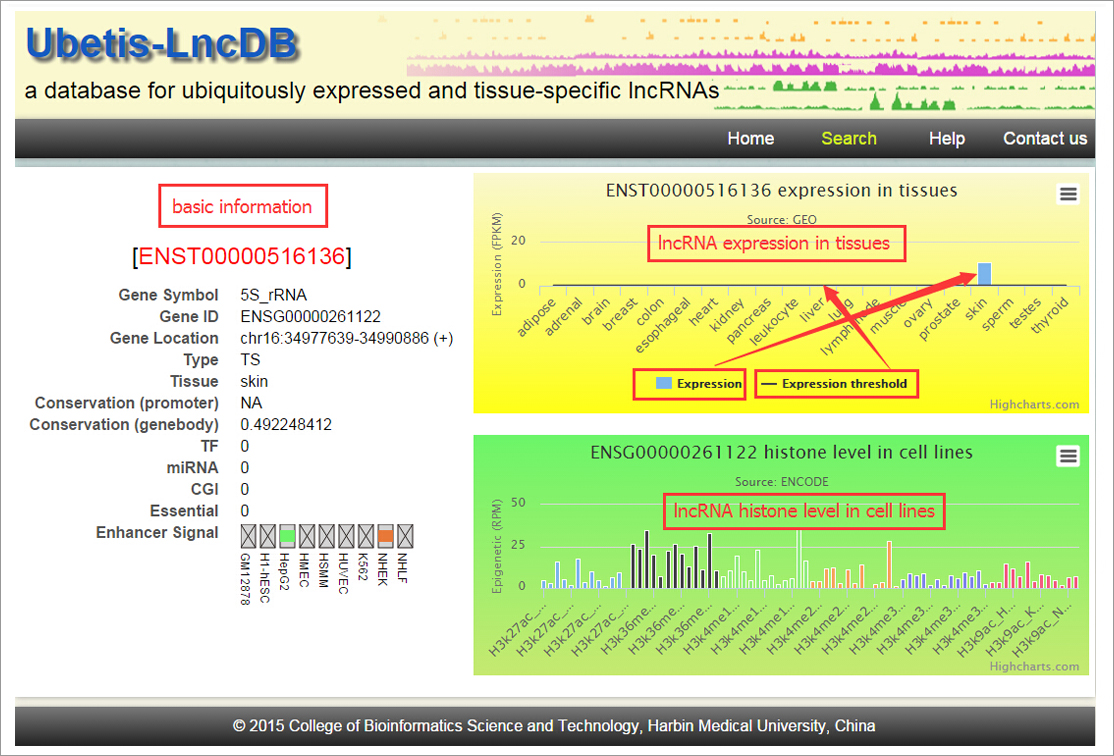
If users click on , users can get information about lncRNA basic description, expression levels in tissues and histone modification levels in cell lines.

2.2 Search tissue-specific lncRNAs

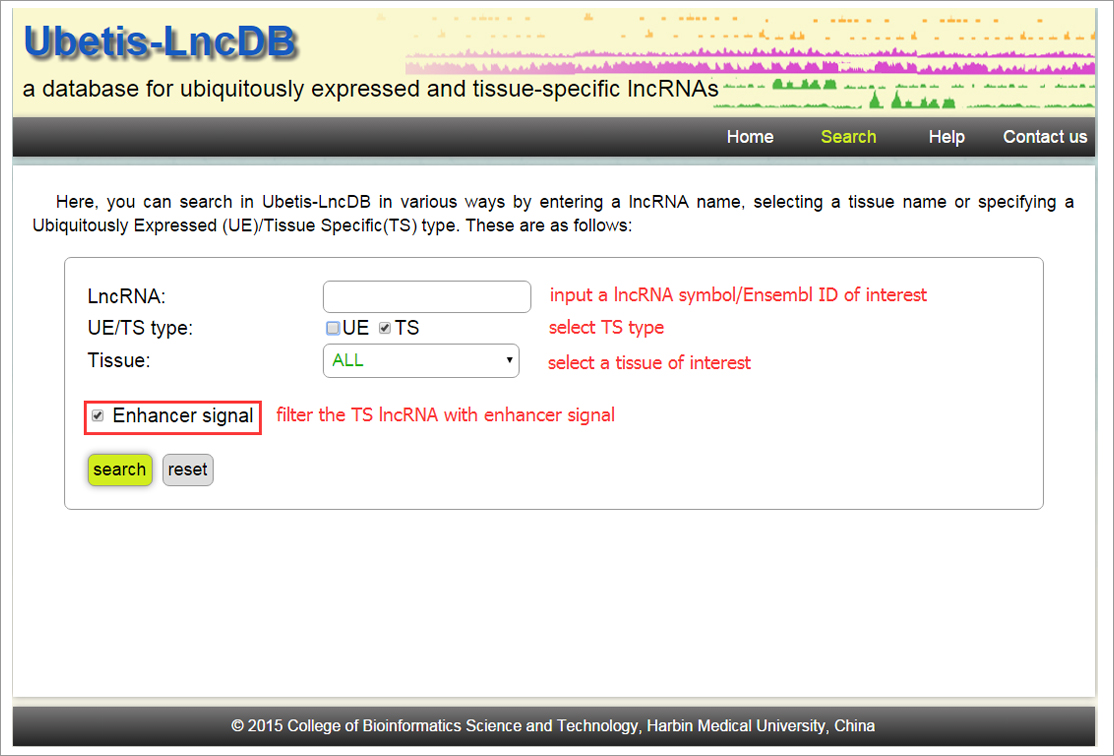
Similar to search ubiquitously expressed lncRNAs, users can also search the tissue-specific lncRNAs. To retrive tissue-specific lncRNAs, users can input a lncRNA name of interest and select the TS type. In addition, the tissue-specific lncRNAs can be filtered by selecting Enhancer Signal so that at least one enhancer exists in the vicinity of lncRNA.


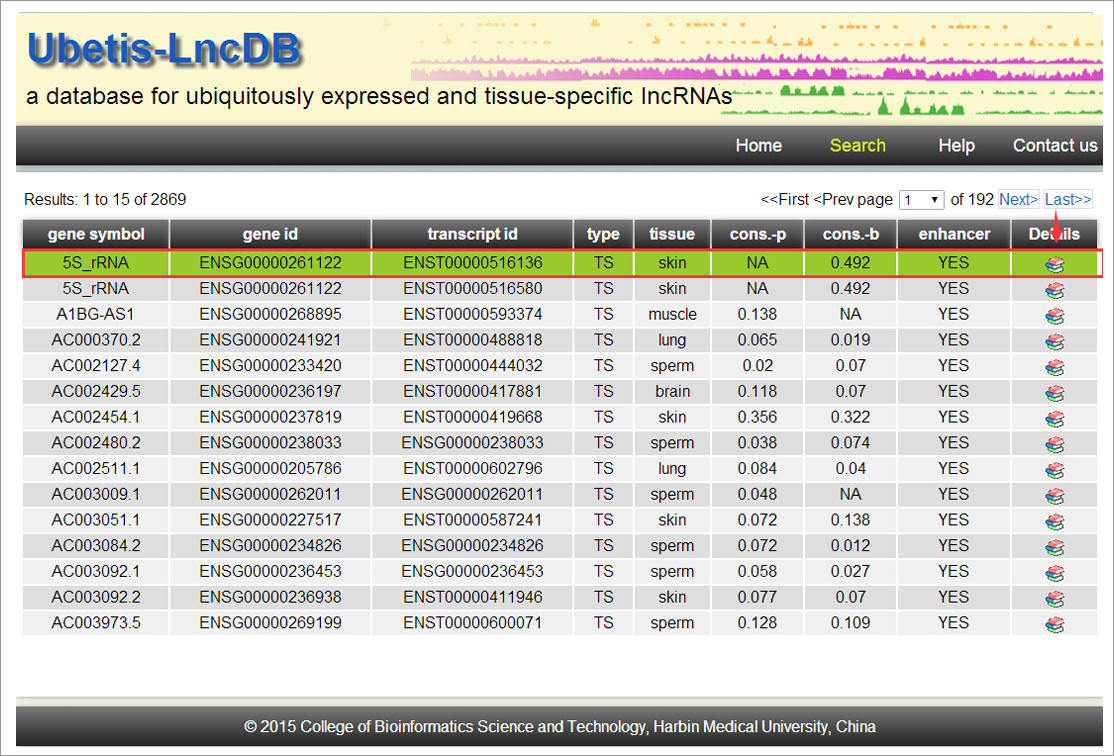
The search result is displayed by default as an overview table that summarizes the tissue-specific lncRNAs, together with their detailed information, such as gene symbol, gene id, transcript id, type, tissue, conservation score at gene promoter, conservation score at gene body, whether at least one enhancer is located in the vicinity of the lncRNA. In addition, the details about lncRNA information, expression levels in tissues and histone modification levels in cell lines can be browsed by clicking .


If users click on , users can get information about lncRNA basic description, expression levels in tissues and histone modification levels in cell lines.

TOP